一日一文英訳してみましょう! 以下、解答例と僕の英作文に対してネイティブからもらったアドバイスも載せました。

ムムッ~、このお題、どう訳そうか。
スポンサーリンク

解答例
When they traveled in Africa, they were faced with many kinds of dangers, but they had to overcome them.
解説
問題文 彼らがアフリカを旅行した時には、さまざまな危険があったのだけれども、それを乗り越えなければならなかった。
・様々な:many kinds of ~
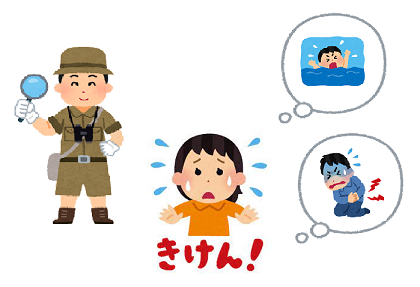
・危険:dangers ※病気や災害など個々の危険(なもの・事)を意味する場合は可算名詞
【危険を意味する類語】
危険を意味する英語はいくつかありますが、Weblio英和辞典によると以下のようです。(https://ejje.weblio.jp/content/danger)
- danger: 程度のいかんを問わず危険の意味を表わす最も一般的な語
- risk: 自己の責任において冒す危険
- peril: 差し迫った大きな避けがたい危険
- hazard: 偶然に左右される,または人間の力では避けることのできない危険
・~がある:be faced with ~ ※ここでは「~がある」は、旅行中ずっと危険な状態であったわけではないと考えられるため、haveではなく、”be faced with”や”encounter”の方が適切なようです。
・乗り越える:overcome
僕の英作文
When they traveled in Africa, they had many kinds of dangers ahead of them, but they had to overcome them.
ネイティブからのアドバイス
- With this first sentence, you will see that I have removed your choice of ‘ahead of them’, and I have rephrased this clause (this part of the sentence) so that you have a more natural and a more accurate clause.
The phrase ‘ahead of + object pronoun’ is usually used to refer to a specific time and not to a general one, so this means that we would use it in a context like this:
My friends did a lot of travelling in Africa. One day, when they were walking in the African bush, they realised there was a herd of elephants ‘ahead of them’. - The sentence above talks about a specific time during these friends’ African journey (‘One day, when we walking ..’).
You began your sentence with ‘When they travelled in Africa, ..’, so this part of your sentence talks about the period of time when the people concerned were in Africa – the period of time from the beginning to the end of their journey; it doesn’t talk about a specific time during that journey, so for this reason, the phrase ‘to be faced with something’ is a better option for you. In your particular sentence, this gives you:
.. , they ‘were faced with’ many kinds of dangers, but .. .
If you prefer, you could also use this alternative:
.. , they ‘experienced’ many kinds of dangers, but .. . (Rather than ‘have, the verb ‘experience’ is a more accurate vocabulary choice in your sentence. To ‘experience’ something has the meaning of to ‘encounter’ and to ‘undergo’ something.)

なるほどな!